
Exhibition Essays
夢之初 Dawn of Dreams
September 2026
夢之初 Dawn of Dreams
Cai Jieying 蔡杰盈
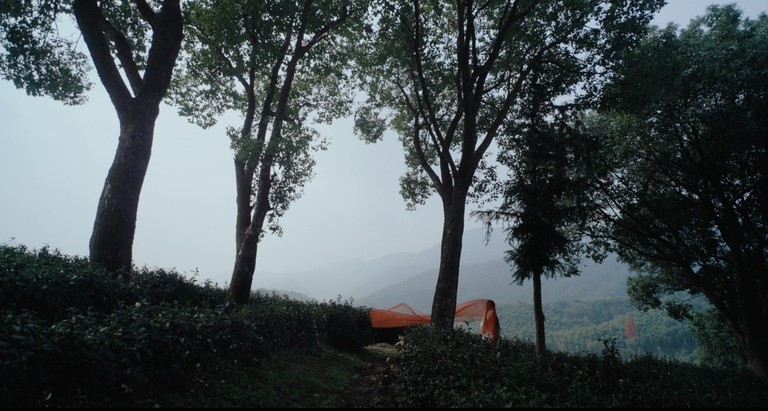
夢之初 Dawn of Dreams by Zed Xu 榛子瞬.
The first time I met Zed, they made me a Vogel’s toastie with veggies and Chinese sausage and I brought over a whole mango to share. They were entering their filmmaking era and I was experimenting with a lens-based practice at university. Although we didn’t collaborate til 2026, we somehow kept in touch, exchanging books we read and artists we shared an interest in.
Dawn of Dreams 夢之初 is a transnational film made across China and New Zealand. The artist doesn’t over-explain the cultural difference; instead, they bring together guzheng, performance, mark-making, landscape and cinematic staging. The film traces diasporic selfhood through return, sonic and bodily memory across both places.1 Zed’s body becomes a vessel in which Chineseness is embedded within rather than through a translated spectacle gaze.
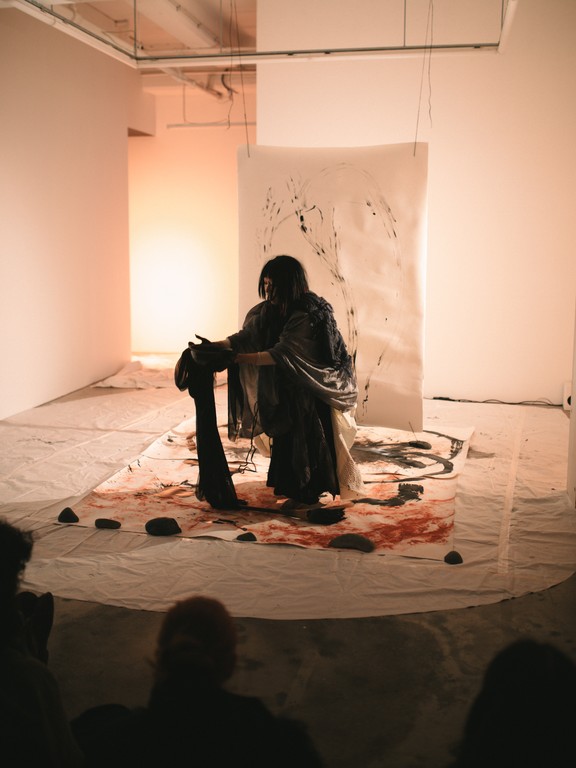
Zed Xu 榛子瞬 performing on opening night.
A live performance by the same name negotiates space, material encounter and migratory belonging. Performed to the film’s original score, the work asks whether a racialised body in a Pākehā dominated environment can truly belong, or does it remain in constant transit and flux? In mainland China, questions of belonging, age anxiety, and the difficulty of fulfilling filial expectations arise. The artist and textile designer Lin Tianmiao’s choice to not express her “Chineseness” through special or iconic symbols shows a quiet confidence to not be translated by Western viewers.2 Similarly to Zed, who does not assign to terms that translate or are confined to a fixed identity. The body is instead porous to the environment, where different visibility arises in different geographies.
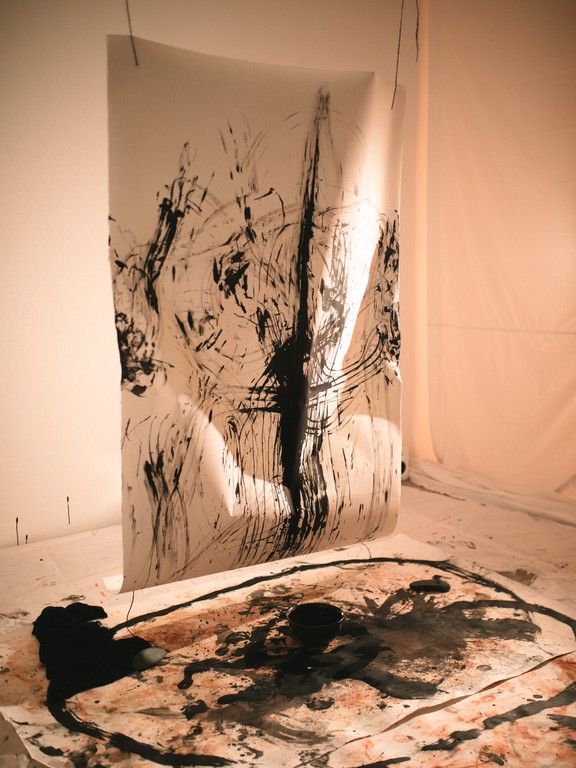
Zed Xu 榛子瞬
The Dreamer in Dawn of Dreams 夢之初 experiences the push and pull between the artist's dreams and the ancestor's dreams. The Dreamer plays Chinese chess with their own double. Subverting the traditional path paved for them, the Dreamer seeks answers/expression beyond language. Although the artist is bilingual, the film contains no dialogue. Some things are felt with the body rather than spoken.
When I first saw a draft edit, Zed had just wrapped up filming in Aotearoa and China with cinematographer Nick Willoughby. In China, the pair travelled to Nanle, Ürümqi and Hangzhou. These are sites connected to Zed's birthplace and ancestral homes. The making process involved Zed's families and newly built collaborative relationships in China. Back in Aotearoa, Zed worked with Jefferson Chen at Goodspace studio to create an immersive original score that brought new life to the visuals. Zed does not create alone and has been cultivating a collective diasporic identity through working closely with others. The credit scene at the end of the film says it all.
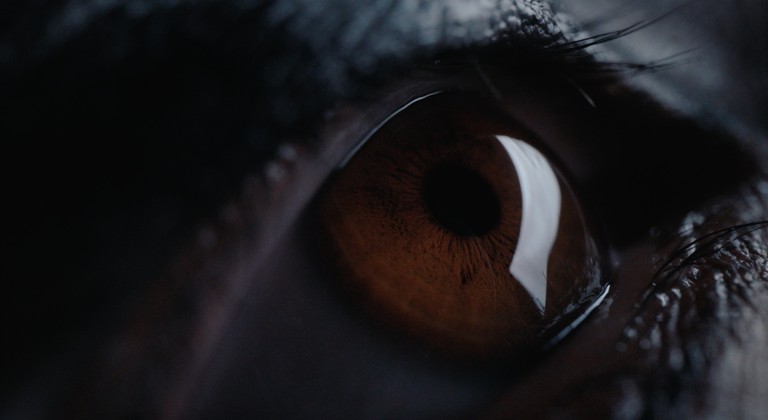
夢之初 Dawn of Dreams by Zed Xu 榛子瞬.
Sonic memory is the undercurrent of this film; symbolic of Zed’s migration journey, the guzheng came with them at the age of fourteen. Zed’s vocals resonate with the guzheng. The featured song is a farewell song from the artist’s childhood, written by a Qing dynasty monk called Hongyi (弘一法师/李叔同). Farewells and reunion surface the migrant body's memory to song; a portal that traverses past and present. Where sonic material collapses time and space tracing the ancestors' dreams as the self journeys forward.
These themes of body, material, and sonic memory also reflect my personal journey of migrating as a young child. Saying goodbye before I knew what reunions were.
My mother tells me during the one child policy, she wasn’t able to know my sex until I was born.3 This was to prevent discrimination against females who are more likely to be aborted. For people born in China during this policy, filial expectations and old age care is a personal experience shaped by societal policy.
In the vastness of Chinese contemporary art where Mao, globalisation, cultural revolution and certain events are favoured globally, the subtle social commentary of artists like Zed that use personal narrative can be easily missed if one is unfamiliar with its cultural and historical context. This curiosity, intuition and reimagination for Zed is just the beginning.
This show was formed through the Massey University Creative Arts Internship and supported by Brooke Pou and Tendai Mutambu at Enjoy Contemporary Art Space. We thank those that came before us who have shaped us with knowledge, love and care.
-
1.
Zed Xu 榛子瞬, conversation with the artist. July 2026.
-
2.
Lin Tianmiao, "Wrapped up: an interview with Sun Yunfan" China File, September 24 2012. https://www.chinafile.com/wrapped-interview-lin-tianmiao.
-
3.
Penny Kane, Ching Y Choi, “China’s One Child Family Policy” National Library of Medicine, October 1999 doi: 10.1136/bmj.319.7215.992.