
PAST EXHIBITIONS
夢之初 Dawn of Dreams
Zed Xu 榛子瞬
2 Sep – 5 Sep
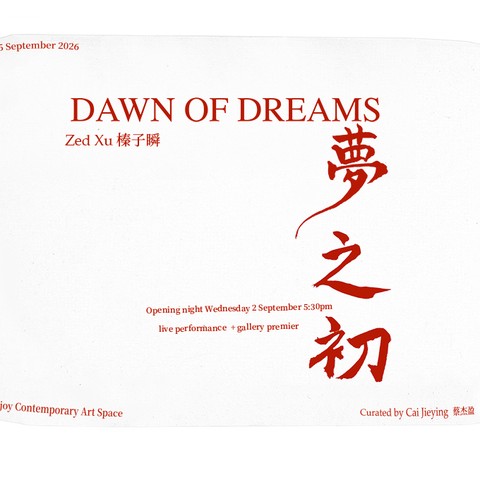
Dawn of Dreams 夢之初 is a transnational film work tracing an embodied migratory journey through cinematic composition, experimental guzheng performance, and mark-making. The film was made across China and New Zealand. Written, produced, performed, and directed by Zed Xu in collaboration with cinematographer Nick Willoughby and original score by Jefferson Chen (Goodspace).
The live performance on opening night negotiates time, space, the body and material encounter to enquire into migratory belongings. Performed to the film’s original score, the work asks whether a racialised body can truly belong, or remain in constant transit and flux.
Silent Screams of Memories
Telly Tuita
18 Jul – 29 Aug
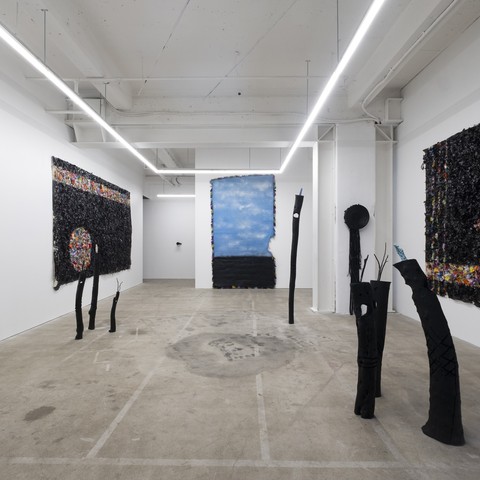
Telly Tuita, Silent Screams of Memories, installation view, 2026. Photo by Samson Dell.
Silent Screams of Memories is an exhibition by Telly Tuita exploring childhood memories through an adult lens. Tuita, who was born in Tonga, spent the first nine years of his life there before being sent to live in Australia. Decades removed from this period, he is able to respond to horror with humour in Repressed Memories, a newly commissioned series at the heart of this exhibition. A head with soap in its mouth, a hand next to an axe, a head through a wall—these confronting images evoke moments of trauma from his time in Australia, a land often lauded for the opportunity it can offer those who relocate there.
Tuita’s new Screaming Idol series represents the artist’s fourteen years of childhood—nine years in Tonga and five in Australia—before he was kicked out of home and forced into adulthood. Older works, including The Great Land of Oz, have also been recontextualised, becoming a wry commentary on nationhood and belonging. Presented alongside this installation is Boy with Red Apple, a short film by Jamie Berry exploring Tuita’s earlier years in Tonga.
The darkness underpinning the exhibition has bled outward into Silent Screams of Memories’ visual form. Dominated by black, the exhibition marks a striking aesthetic departure for Tuita, who is known for his use of bright colours.
These are Addressed to You
Abigail Aroha Jensen, Bas Jan Ader, Christian Dimick, Sarah Rose, Sharon Kivland, Yana Dombrowsky-M'Baye
23 May – 4 Jul
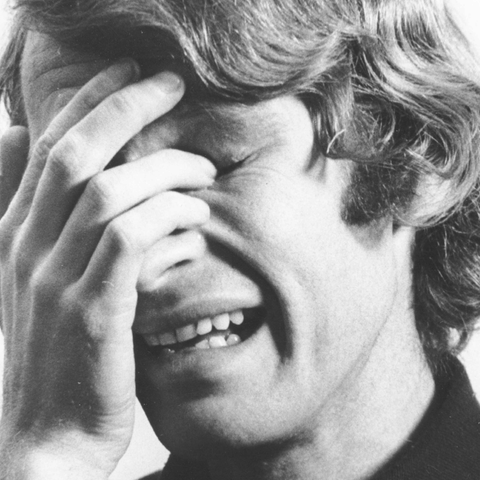
Bas Jan Ader, I'm too sad to tell you, 1970–71. 16mm film transferred to digital video, silent, 3:22 mins. Image courtesy of La Colección Jumex, México.
© The Estate of Bas Jan Ader / Mary Sue Ader Andersen, 2026 / The Artist Rights Society (ARS), New York and Resale Royalties Aotearoa, New Zealand. Courtesy of the Museo Jumex and Meliksetian | Briggs.
These are Addressed to You brings together the work of Bas Jan Ader, Christian Dimick, Yana Nafysa Dombrowsky-M’Baye, Abigail Aroha Jensen, Sharon Kivland and Sarah Rose—artists whose practices span painting, sculpture, sound, performance, writing and moving image. This exhibition borrows its title from a 2025 book in letters by participating artist and writer Sharon Kivland. It explores what it means to address and to be addressed, to correspond and to be in correspondence with. As the definition of a letter encompasses both the alphabetic and the epistolic, these are practices that are attentive to the potentials of language and its transmission. Within this understanding of correspondence, address is slippery, unstable—a crack that appears between sender and receiver.
What happens if it's broken?
Latamai Katoa
28 Mar – 9 May
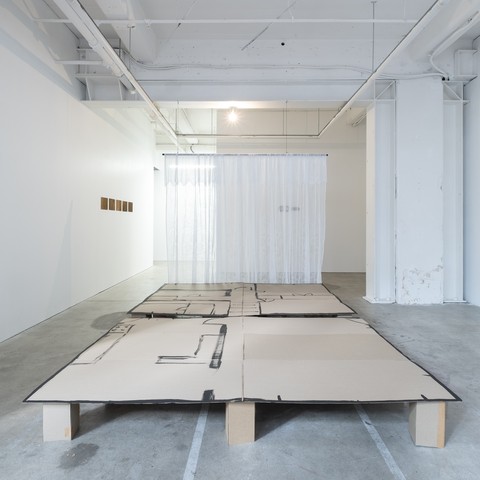
Latamai Katoa, What happens if it's broken? 2026. Photo by Samson Dell.
What happens if it’s broken? considers the home as a site of perpetual repair, shaped through time and life’s performances.
moon iron wings
Lily Worrall
28 Mar – 9 May
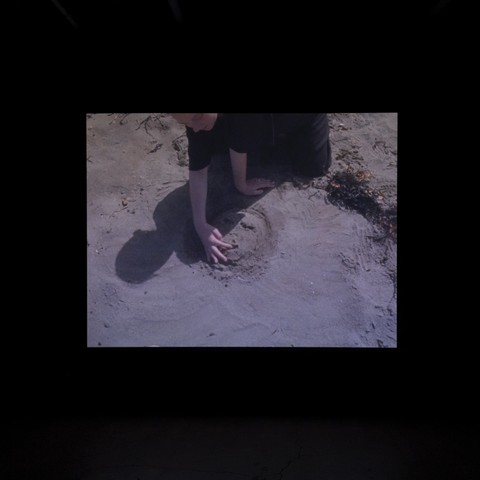
Lily Worrall, moon iron wings, 2026. Photo by Samson Dell.
moon iron wings is an exhibition of new work in still and moving image by Tāmaki Makaurau-born, Prishtina-based artist Lily Worrall, developed from her time in residence at the Rita Angus Cottage in the summer of 2025.
of forests and concrete
Matt Tini
31 Jan – 14 Mar
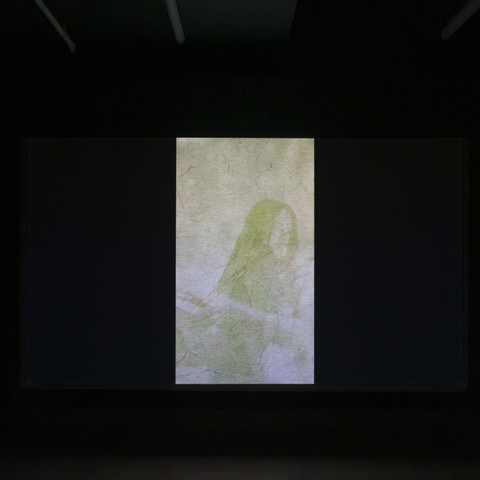
Matt Tini, of forests and concrete, 2025. Photo by Samson Dell.
of forests and concrete is an exhibition of new work by Matt Tini developed from his ongoing research into harakeke as both resonant material and a ground for image-making.
I touch the surface, we draw wild beauty
Sena Park
31 Jan – 14 Mar
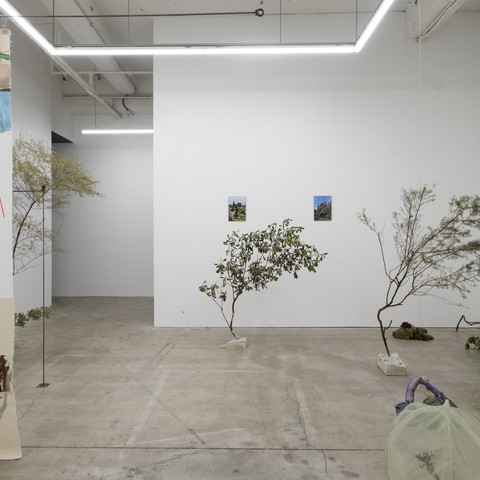
Sena Park, I touch the surface, we draw wild beauty, 2025. Photo by Samson Dell.
Sena Park’s practice explores the evolving relationship between human-designed environments and natural ecosystems, two poles held in particular tension within domestic gardens.