
PAST EXHIBITIONS
夢之初 Dawn of Dreams
Zed Xu 榛子瞬
2 Sep – 5 Sep
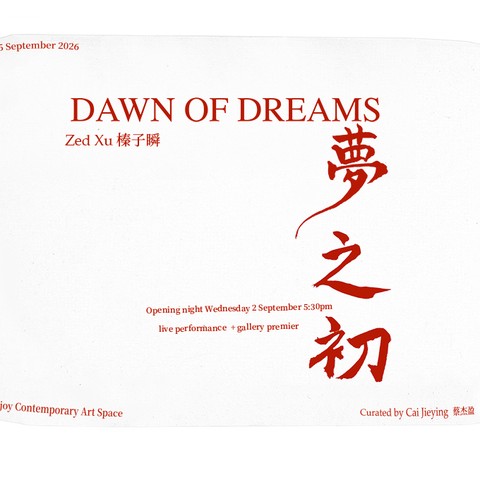
Dawn of Dreams 夢之初 is a transnational film work tracing an embodied migratory journey through cinematic composition, experimental guzheng performance, and mark-making. The film was made across China and New Zealand. Written, produced, performed, and directed by Zed Xu in collaboration with cinematographer Nick Willoughby and original score by Jefferson Chen (Goodspace).
The live performance on opening night negotiates time, space, the body and material encounter to enquire into migratory belongings. Performed to the film’s original score, the work asks whether a racialised body can truly belong, or remain in constant transit and flux.
Silent Screams of Memories
Telly Tuita
18 Jul – 29 Aug
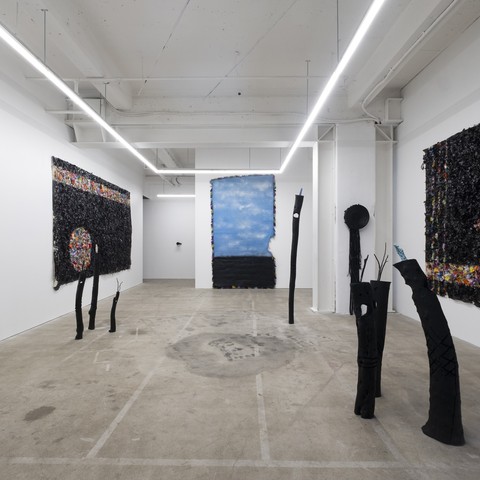
Telly Tuita, Silent Screams of Memories, installation view, 2026. Photo by Samson Dell.
Silent Screams of Memories is an exhibition by Telly Tuita exploring childhood memories through an adult lens. Tuita, who was born in Tonga, spent the first nine years of his life there before being sent to live in Australia. Decades removed from this period, he is able to respond to horror with humour in Repressed Memories, a newly commissioned series at the heart of this exhibition. A head with soap in its mouth, a hand next to an axe, a head through a wall—these confronting images evoke moments of trauma from his time in Australia, a land often lauded for the opportunity it can offer those who relocate there.
Tuita’s new Screaming Idol series represents the artist’s fourteen years of childhood—nine years in Tonga and five in Australia—before he was kicked out of home and forced into adulthood. Older works, including The Great Land of Oz, have also been recontextualised, becoming a wry commentary on nationhood and belonging. Presented alongside this installation is Boy with Red Apple, a short film by Jamie Berry exploring Tuita’s earlier years in Tonga.
The darkness underpinning the exhibition has bled outward into Silent Screams of Memories’ visual form. Dominated by black, the exhibition marks a striking aesthetic departure for Tuita, who is known for his use of bright colours.
These are Addressed to You
Abigail Aroha Jensen, Bas Jan Ader, Christian Dimick, Sarah Rose, Sharon Kivland, Yana Dombrowsky-M'Baye
23 May – 4 Jul
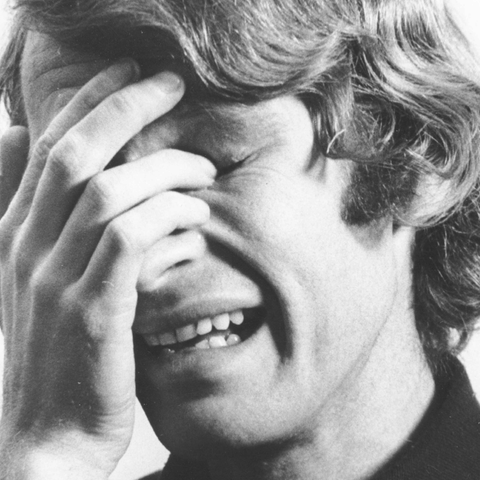
Bas Jan Ader, I'm too sad to tell you, 1970–71. 16mm film transferred to digital video, silent, 3:22 mins. Image courtesy of La Colección Jumex, México.
© The Estate of Bas Jan Ader / Mary Sue Ader Andersen, 2026 / The Artist Rights Society (ARS), New York and Resale Royalties Aotearoa, New Zealand. Courtesy of the Museo Jumex and Meliksetian | Briggs.
These are Addressed to You brings together the work of Bas Jan Ader, Christian Dimick, Yana Nafysa Dombrowsky-M’Baye, Abigail Aroha Jensen, Sharon Kivland and Sarah Rose—artists whose practices span painting, sculpture, sound, performance, writing and moving image. This exhibition borrows its title from a 2025 book in letters by participating artist and writer Sharon Kivland. It explores what it means to address and to be addressed, to correspond and to be in correspondence with. As the definition of a letter encompasses both the alphabetic and the epistolic, these are practices that are attentive to the potentials of language and its transmission. Within this understanding of correspondence, address is slippery, unstable—a crack that appears between sender and receiver.
What happens if it's broken?
Latamai Katoa
28 Mar – 9 May
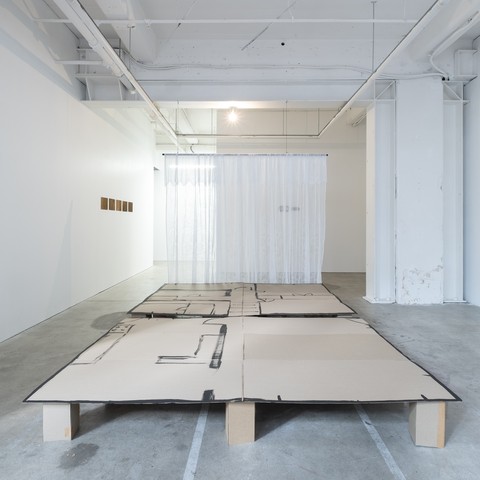
Latamai Katoa, What happens if it's broken? 2026. Photo by Samson Dell.
What happens if it’s broken? considers the home as a site of perpetual repair, shaped through time and life’s performances.
moon iron wings
Lily Worrall
28 Mar – 9 May
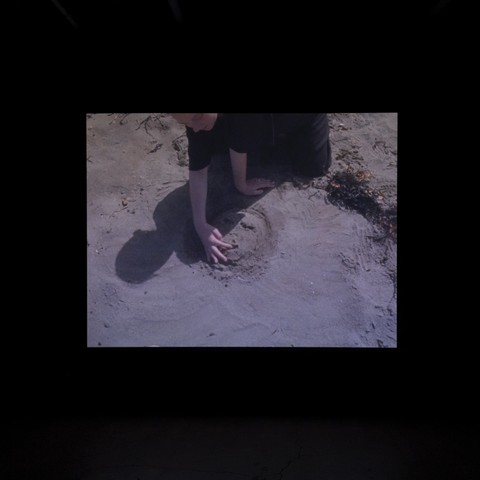
Lily Worrall, moon iron wings, 2026. Photo by Samson Dell.
moon iron wings is an exhibition of new work in still and moving image by Tāmaki Makaurau-born, Prishtina-based artist Lily Worrall, developed from her time in residence at the Rita Angus Cottage in the summer of 2025.
I touch the surface, we draw wild beauty
Sena Park
31 Jan – 14 Mar
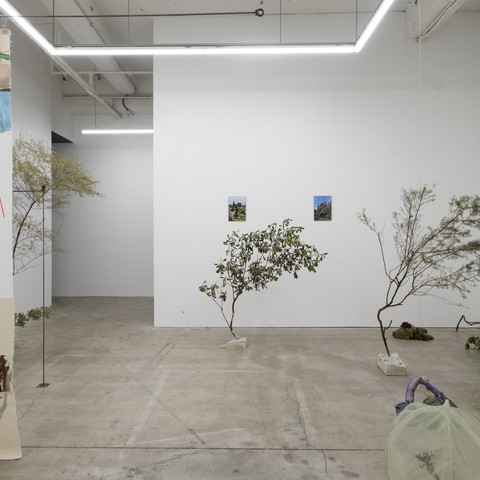
Sena Park, I touch the surface, we draw wild beauty, 2025. Photo by Samson Dell.
Sena Park’s practice explores the evolving relationship between human-designed environments and natural ecosystems, two poles held in particular tension within domestic gardens.
of forests and concrete
Matt Tini
31 Jan – 14 Mar
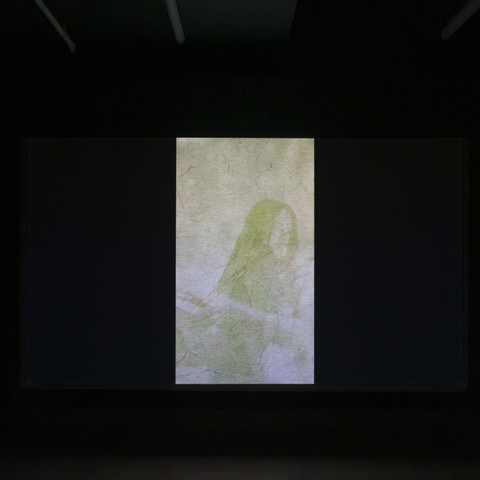
Matt Tini, of forests and concrete, 2025. Photo by Samson Dell.
of forests and concrete is an exhibition of new work by Matt Tini developed from his ongoing research into harakeke as both resonant material and a ground for image-making.
Under the Pasture
George Turner
25 Oct – 20 Dec 2025
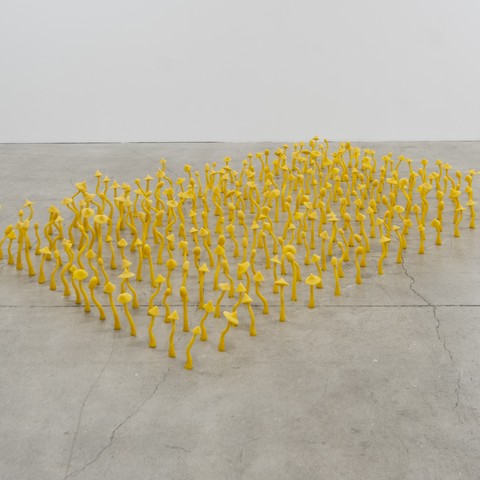
George Turner, Out of the Scene, into the Fever, 2025. Installation view. Photo by Samson Dell.
In Under the Pasture, George Turner presents new work centred on old concerns. Known for their large scale projections featuring experimental digital technologies, Turner’s work is rooted in Pākehā identity and the intersections of nature, technology, and belonging.
Waitirohia
Tessa Russell
25 Oct – 20 Dec 2025
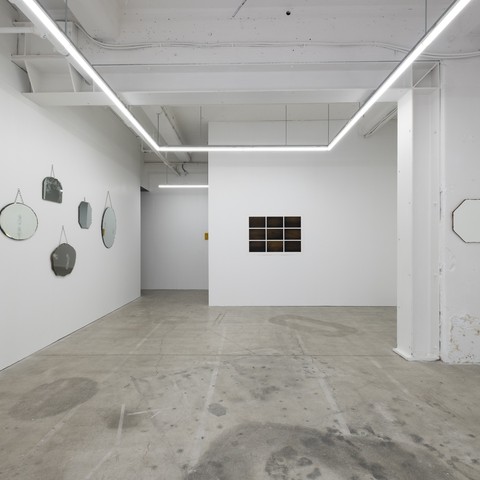
Tessa Russell, Waitirohia, 2025. Installation view. Photo by Samson Dell.
Waitirohia is an extension of Tessa Russell’s ongoing exploration into He Whakaputanga o te Rangatiratanga o Nu Tireni me Te Tiriti o Waitangi.
NO FUTURE - The Cost of Extraction
Elvis Booth-Claveria, Fiona Clark, Hamish Garry
30 Aug – 17 Oct 2025
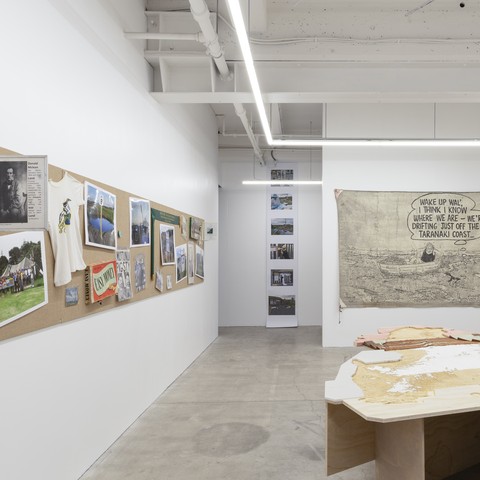
NO FUTURE - The Cost of Extraction. Installation view. Courtesy of Cheska Brown.
My mum reckons the ground beneath Taranaki will collapse one day and we’ll all fall into a hole. My dad says that the local gas and oil industry fracking the land provided jobs where many were lost due to the closure of the meat works.
An Ethics of Witnessing
Aroha Matchitt-Millar, Fetishini, Frankie Matchitt-Millar, p Walters
5 Jul – 16 Aug 2025
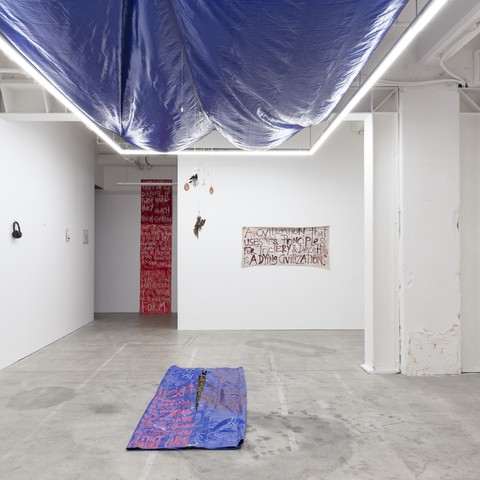
The Ethics of Witnessing, installation view. Image courtesy of Cheska Brown.
Chapter Break: Enjoy Studio Programme
Aroha Matchitt-Millar, Fetishini, Frankie Matchitt-Millar, p Walters
4 Jun – 28 Jun 2025
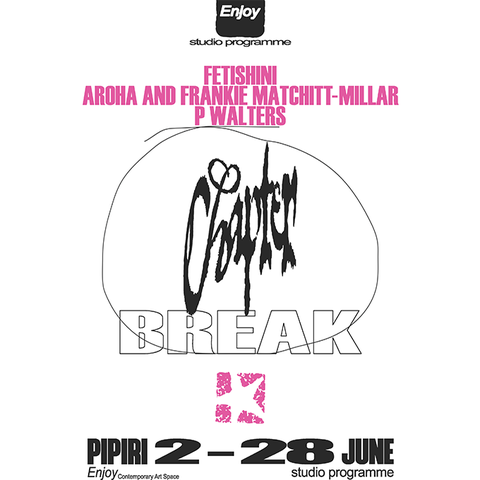
Graphic designed by Joe Locke.
This Pipiri June, Enjoy Contemporary Art Space launches our Studio Programme, welcoming four innovative ringatoi to develop new work and reimagine the gallery‘s possibilities. Joining us as our studio and Chapter Three artists, Fetishini (Te Whanganui-ā-Tara), Aroha and Frankie Matchitt-Millar (Te Whanganui-ā-Tara), and p Walters (Tāmaki Makaurau) will transform Enjoy through their boundary-pushing practices.
Karamu Meets Coffee
Keelin Bell
1 Jun – 16 Aug 2025
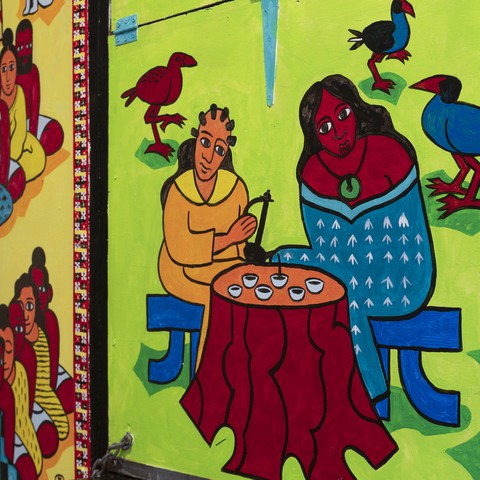
Keelin Bell, Karamu Meets Coffee, 2025. Photo courtesy of Cheska Brown.
In 2025, Enjoy Contemporary Art Space partnered with our neighbour Mother of Coffee Ethiopian restaurant to commission a new mural between our premises. From an open call for proposals, we jointly selected Keelin Bell (Ngāti Maniapoto, Ngāti Porou, Ngāpuhi).
The Shamash stays the same but the Atua is different
Mariam Tawfik
12 Apr – 24 May 2025
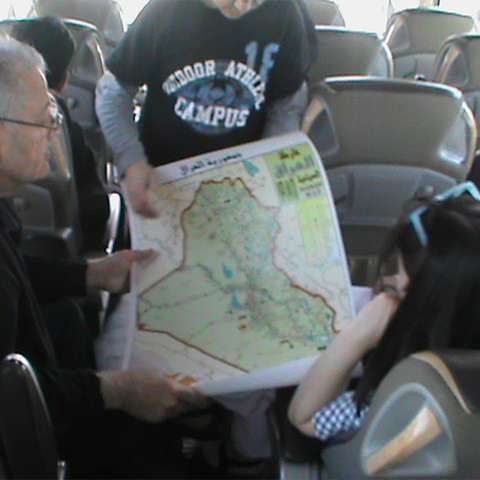
Mariam Tawfik, The Shamash is the same but the Atua is different, 2025, film still. Image courtesy of the artist.
Mariam Tawfik's film The Shamash stays the same but the Atua is different embodies radical sci-fi visions that reimagine indigenous futures—not through Western techno-utopianism, but as a reclamation of Mesopotamia's stolen temporalities. Filmed during her first trip to Iraq in 2024, Tawfik's work rejects both colonial amnesia and fossilised nostalgia, proposing instead an Indigenous Futurism rooted in Iraq's layered history of disruption and its unexpected resonances with te ao Māori. For Tawfik, the future was always buried in the land.
Where Is My Childhood?
Ali Asfour
12 Apr – 24 May 2025
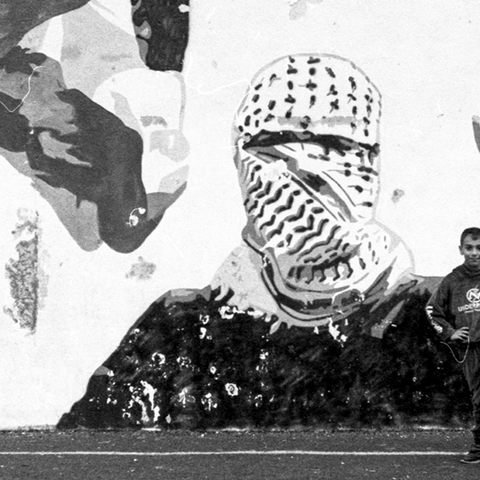
Ali Asfour, Goalposts and Frontlines, 2025. Image courtesy of the artist.
Where Is My Childhood? by Ali Asfour unravels the reality of a childhood shaped by borders, checkpoints, and the ever-present weight of surveillance. It is not a story of innocence, but of endurance—of children who learn to navigate fear before they learn to dream, who memorise escape routes instead of bedtime stories. This piece is a confrontation, a record of what it means to grow up under occupation, where even play mirrors survival, and where joy itself is an act of defiance.
Through urgent, unflinching prose, Where Is My Childhood? dismantles the illusion of a universal childhood. It offers no comfort, only truth—of a world where laughter exists alongside loss, where identity is a battleground, and where every moment is a quiet rebellion against erasure. This work does not seek permission to be heard. It demands to be seen.
Tīpurepure Au Va'ine
Tīpurepure Au Va'ine
22 Mar – 23 Mar 2025
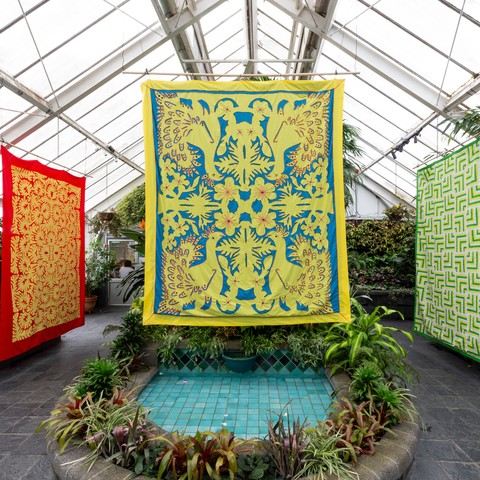
Tīpurepure Au Vai'ne, installation view. Courtesy of Cheska Brown.
Tīpurepure Au Va’ine is an exhibition featuring the works of the Porirua based Cook Islands sewing group of the same name and multi-disciplinary artist, Jamie Berry. Through the work of tīvaevae and soundscape, these artists pay homage to whakapapa, imagery and oro (sound) reminiscent of their homelands. This offsite exhibition at Begonia House, curated by Tehani Ngapare Rau-Te-Tara Buchanan, honours the many Cook Islanders who have found Begonia House to be a place of connection and inspiration while living in the diaspora.
Rutu, Rongo and Rita
Maungarongo (Ron) Te Kawa
15 Feb – 29 Mar 2025
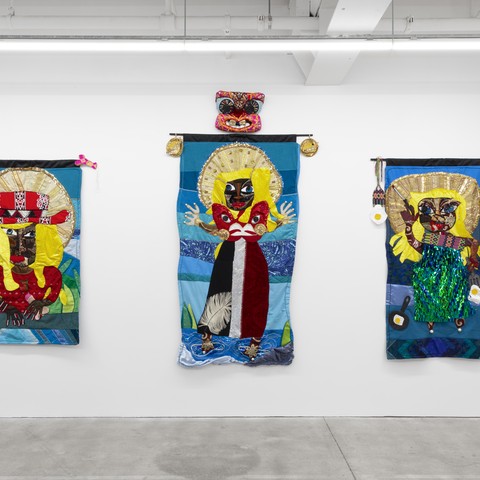
Maungarongo Te Kawa, Rutu, Rongo and Rita, 2025, installation view. Image courtesy of Cheska Brown.
Maungarongo (Ron) Te Kawa’s exhibition Rutu, Rongo and Rita originated last summer, when the artist spent time as the Rita Angus resident at the historic cottage in Te Whanganui-a-Tara.
During this period, Te Kawa researched Angus while beginning a series of nine wall hangings. Angus’ painting Rutu (1951) in particular interested him. While the work is often referred to as one of Angus’ many self-portraits, Bronwyn Lloyd notes that Angus herself considered it an “imaginary portrait.” [1] Described as a “beautiful, incongruous mash-up of cultures” by Matariki Williams, Rutu is “the most visible and well-known exemplar of a person of colour in Angus’s catalogue” [2], an aspect that holds Te Kawa’s attention as he explores the themes of skin colour politics in Aotearoa’s past, present, and future. In Rutu Goes to Waitangi for Target Practice (2024-25), Te Kawa asks what kind of Pākehā Rutu would be now; ultimately believing that she would be covered in “Tino Rangatiratanga swag…hurling dildos at David Seymour.” [3] Expanding beyond Rutu, he has taken figures from Māori mythology such as Pania of the Reef and pop culture including Amy Winehouse, and re-envisioned them with compassion, humour and hope. The works displayed in this exhibition are an exploration into the themes of skin colour politics in Aotearoa’s past, present, and future.
1. Bronwyn Llyod, “Rutu”, Te Papa, https://collections.tepapa.govt.nz/object/39499.
2. Matariki Williams, “Rita and Rutu”, Newsroom, 01/02/2022, https://newsroom.co.nz/2022/02/01/waitangi-week-rita-in-blackface/.
3. Email correspondence with the artist, 20/01/2025.
Low Tide
Manu Vaea
15 Feb – 29 Mar 2025
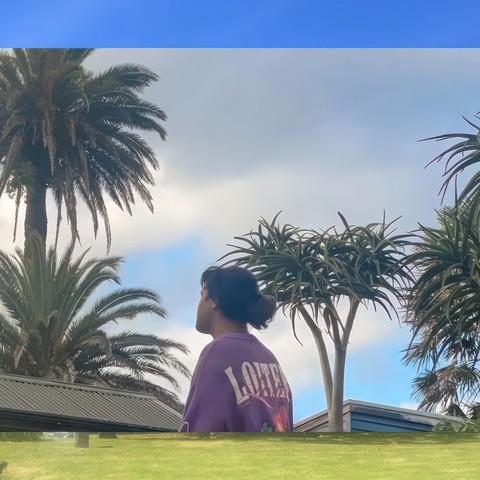
Still from Low Tide. Image courtesy of Manu Vaea.
Low Tide emerges as a contemplation of queer mundanity. Through the mundane, Manuha’apai Vaeatangitau (Manu Vaea) counteracts the pressure to be extraordinary and instead highlights the quiet, repetitive and often unremarkable moments that define everyday life.
By insisting on the ordinary, Vaea aims to “induce a state that allows for emotions to simmer under the skin without a need for expression.” [1] She has been shaped by ties to family, space and place in Tāmaki Makaurau and Tonga, observing that “these geographies often serve as sacred, yet fractured mirrors, reflecting back my own inner turbulence.” [2] Scenes from the domestic life of the artist in both of her homes in Tāmaki and Tonga feature moments alone, art-making with whānau and nights out with friends. Centering Low Tide around queer mundanity and what sits in the cracks of that—grief, malaise, regret—has allowed Vaea to work through her own mamae without resorting to the oft-overused trauma and pervasive larger-than-life love narratives regularly imposed on queerness.
1. Email correspondence with the artist, 27/01/2025.
2. Ibid.
Iterations / Alterations
Catherine Griffiths
15 Feb – 29 Mar 2025
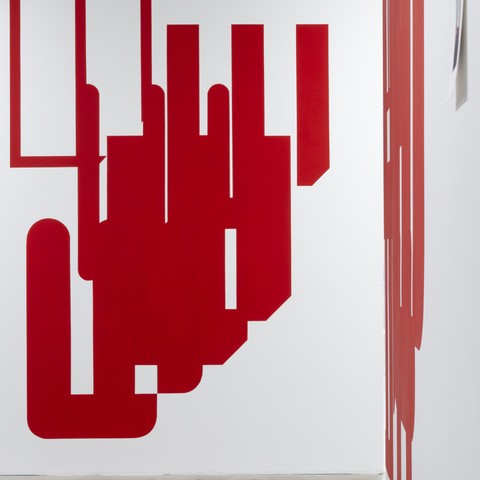
Catherine Griffiths, Iterations/Alterations, 2025, installation view. Image Courtesy of Cheska Brown.
In Iterations/Alterations, Catherine Griffiths expands upon her past work while also responding to current events. Griffiths presents a body of work that is ever-evolving, referencing global social and political issues. Unwavering support of Palestine is a focus for the artist, who interrogates her priorities and perspectives amidst the genocide being committed by Israel. Included in this exhibition is a limited edition run of GAZ/A prints—the proceeds from which will go to a charity supporting Palestinians in Gaza.
Extraordinary Contact
Alexandra McFarlane
6 Dec 2024 – 1 Feb 2025
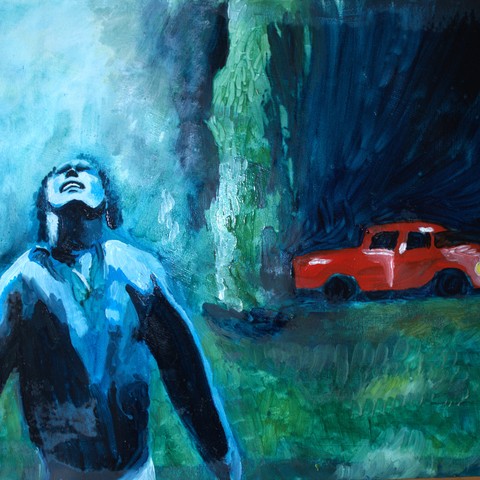
Alexandra McFarlane, Blue Leaf Star Bound, 2024, oil on paper. Courtesy of the artist.
In Extraordinary Contact, Alexandra McFarlane delves into the liminal space between belief and experience, exploring alien abduction narratives as a lens to examine trauma, memory, and the search for meaning. Anchored in her own childhood memory of a devastating house fire in Ōtautahi, the exhibition reflects on how extraordinary events shape our sense of self and reality.